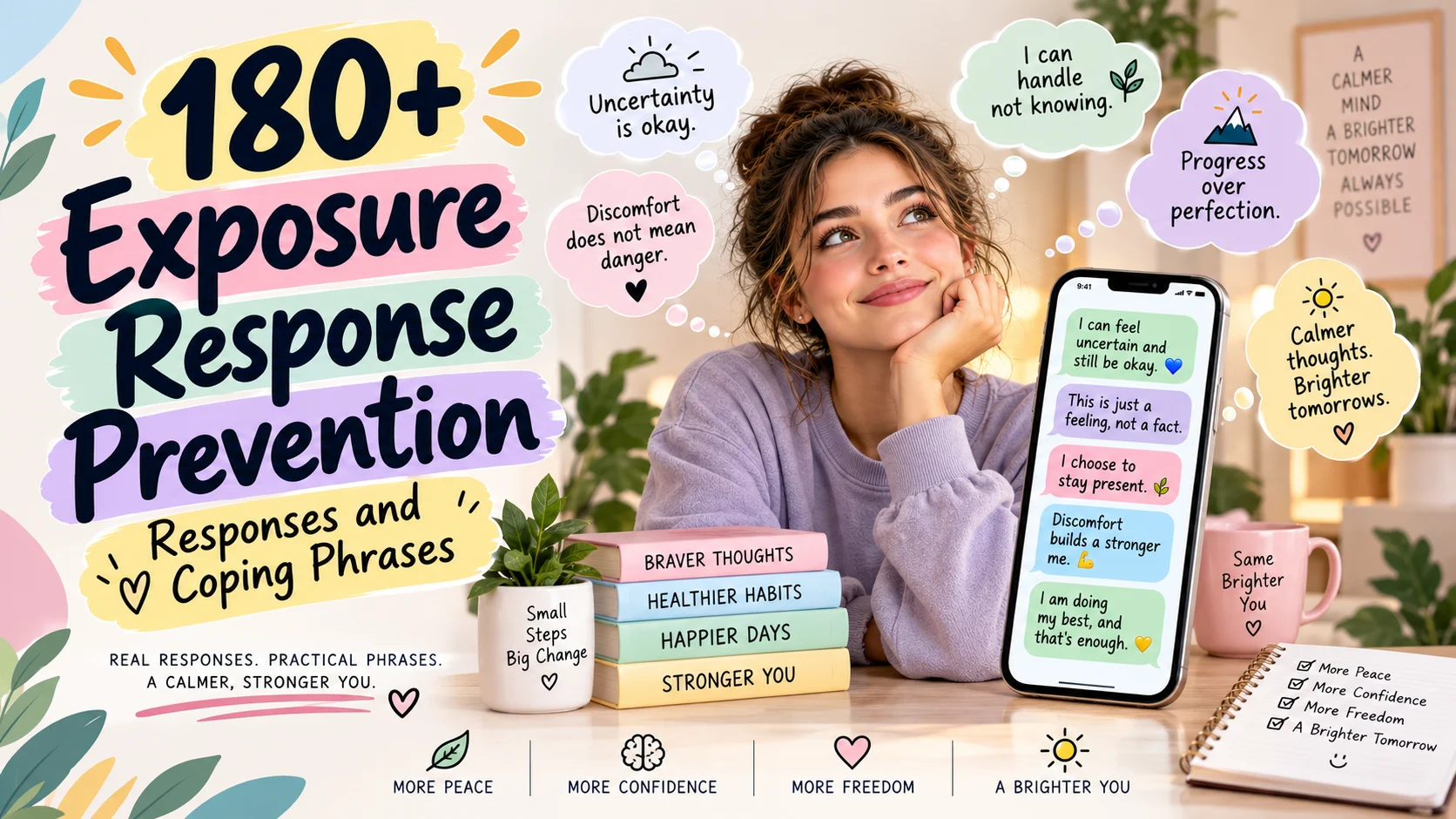
Exposure response prevention can feel uncomfortable because it involves facing anxiety-provoking thoughts or situations without automatically doing the usual compulsive response. The right coping phrase can help you pause, stay present and let uncertainty exist without feeding the anxiety cycle.
“I can sit with this feeling,” “Maybe, maybe not,” “I don’t need to solve this right now,” “Let the thought be there,” “I can choose not to respond.”
Ever had your brain send you a stressful notification that you definitely did not subscribe to? A thought pops up, anxiety arrives, and suddenly you feel like you have to check, repeat, avoid, or get reassurance. It happens while texting friends, scrolling through DMs, sitting at work, hanging out with a crush, or trying to relax at home, those urges can feel incredibly convincing.
That is where exposure response prevention can become a useful approach. Often called ERP, it focuses on learning to face uncomfortable triggers while resisting the urge to perform the usual compulsive or safety behavior. The goal is not to have perfect thoughts or instantly feel calm. It is to build tolerance for uncertainty and discomfort. The following responses are short, relatable, and easy to remember when your brain starts demanding an immediate reaction.
Calm Responses
- I can breathe and let this moment pass.
Example: Use this when anxiety feels urgent and you want to slow yourself down before reacting.
Meaning: It reminds you that feelings can rise and fall without needing immediate action. - I don’t have to fix this feeling right now.
Example: Helpful when your mind insists that relief must happen immediately.
Meaning: It creates space between discomfort and compulsive action. - This is uncomfortable, not an emergency.
Example: Use it when anxiety makes a situation feel more dangerous than it may be.
Meaning: It helps you respond with perspective rather than panic. - I can stay here with the uncertainty.
Example: Helpful during moments when you desperately want a guaranteed answer.
Meaning: It encourages tolerance of not knowing. - One moment at a time.
Example: Use this when your thoughts start racing far into the future.
Meaning: It brings your attention back to the present. - I can notice the urge without following it.
Example: Useful when you feel pulled toward a familiar ritual or reassurance behavior.
Meaning: It separates having an urge from acting on it. - Let the feeling be loud. I can still stay calm.
Example: Use this when anxiety feels intense and demanding.
Meaning: It reinforces that strong feelings do not control every choice. - I’m allowed to pause.
Example: Helpful when you feel pressured to react instantly.
Meaning: It gives you permission to create breathing room. - Nothing needs to be solved this second.
Example: Use it when your brain starts treating every thought like an urgent task.
Meaning: It challenges the false sense of urgency. - I can be okay without certainty.
Example: Helpful when you keep searching for the perfect answer.
Meaning: It supports acceptance of uncertainty. - This feeling can exist beside me.
Example: Use this when you are trying to stop fighting every uncomfortable emotion.
Meaning: It encourages acceptance rather than struggle. - Slow is still progress.
Example: Helpful when practicing ERP feels difficult or messy.
Meaning: It reminds you that progress does not need to be perfect.
Confident Responses
- I can handle more discomfort than I think.
Example: Use this before facing a challenging trigger.
Meaning: It builds trust in your ability to cope. - I don’t need anxiety’s permission to move forward.
Example: Helpful when fear tries to decide what you can or cannot do.
Meaning: It puts your choices ahead of anxious feelings. - I choose my next move.
Example: Use this when an urge feels automatic.
Meaning: It reinforces personal agency. - An urge is not an order.
Example: Perfect for moments when a compulsion feels impossible to resist.
Meaning: It reminds you that impulses are not commands. - I can do this while feeling nervous.
Example: Use this before a difficult task or exposure exercise.
Meaning: It shows that courage and anxiety can exist together. - I’ve handled hard feelings before.
Example: Helpful when you doubt your ability to cope.
Meaning: It reminds you of your existing resilience. - I don’t need perfect control to be okay.
Example: Use this when your mind demands everything be certain or exact.
Meaning: It challenges perfectionistic pressure. - I can let the question stay unanswered.
Example: Helpful when you feel tempted to seek reassurance.
Meaning: It strengthens tolerance for uncertainty. - My values matter more than this urge.
Example: Use it when deciding how you want to act despite anxiety.
Meaning: It shifts focus toward what is meaningful to you. - I can wait before responding.
Example: Helpful when you feel rushed into checking or repeating something.
Meaning: It interrupts automatic reactions. - Discomfort does not mean I’m failing.
Example: Use this when an exposure exercise feels emotionally difficult.
Meaning: It reframes discomfort as part of the process. - I’m stronger than the urge to get immediate relief.
Example: Helpful when a quick reassurance habit feels tempting.
Meaning: It supports confidence in delaying the response.
Casual And Chill Responses
- Yep, that thought can just chill there.
Example: Use this when you want a relaxed response to an unwanted thought.
Meaning: It reduces the importance you give the thought. - Okay, brain. Thanks for the random update.
Example: Helpful when your mind sends another unwanted mental alert.
Meaning: It acknowledges the thought without engaging with it. - Not everything needs a reply.
Example: Use this when you feel pulled into mentally arguing with a thought.
Meaning: It encourages disengagement. - I’m not doing the anxiety dance today.
Example: Helpful when you recognize a familiar cycle beginning.
Meaning: It humorously reinforces your choice not to follow the pattern. - That’s a thought, and I’m still here.
Example: Use this when a thought feels unusually powerful.
Meaning: It puts the thought in perspective. - We can be uncomfortable and still vibe.
Example: Helpful when anxiety shows up during something you enjoy.
Meaning: It reminds you that discomfort does not have to cancel your day. - Maybe it matters, maybe it doesn’t. Moving on.
Example: Use this when your brain demands endless analysis.
Meaning: It supports acceptance without solving every question. - I hear the alarm. I’m not chasing it.
Example: Helpful when anxiety feels like a loud internal warning.
Meaning: It acknowledges the feeling without obeying it. - No emergency meeting required.
Example: Use this when your brain turns a small uncertainty into a major crisis.
Meaning: It adds humor while reducing urgency. - I’m good without checking again.
Example: Helpful when you feel tempted to repeat a checking behavior.
Meaning: It reinforces your decision to resist repetition. - The thought can stay. I’ve got stuff to do.
Example: Use this when you want to redirect attention toward daily life.
Meaning: It keeps the thought from becoming the center of your day. - Plot twist: I don’t have to engage.
Example: Helpful when you notice yourself about to start an old mental routine.
Meaning: It reminds you that a different response is available.
Supportive Responses
- It’s okay that this feels difficult.
Example: Use this when you are frustrated with your own anxiety.
Meaning: It adds self-compassion without demanding instant comfort. - I can be patient with myself.
Example: Helpful after a challenging moment.
Meaning: It encourages a kinder approach to progress. - I don’t have to get everything right.
Example: Use this when you worry about doing ERP perfectly.
Meaning: It reduces perfectionistic pressure. - A hard moment does not erase my progress.
Example: Helpful after a setback or difficult day.
Meaning: It reminds you that growth is not all-or-nothing. - I can try again at the next opportunity.
Example: Use this when things did not go how you hoped.
Meaning: It encourages flexibility and persistence. - I deserve patience while I learn.
Example: Helpful when self-criticism becomes intense.
Meaning: It supports compassionate self-talk. - Feeling anxious does not make me weak.
Example: Use this when you judge yourself for being nervous.
Meaning: It separates emotional experiences from personal worth. - I can ask for appropriate support when I need it.
Example: Helpful when you feel overwhelmed and need guidance.
Meaning: It reminds you that support can be part of healthy coping. - I’m learning a new response, and that takes practice.
Example: Use this when change feels slower than expected.
Meaning: It normalizes the learning process. - I can celebrate the small wins.
Example: Helpful after resisting even a small urge.
Meaning: It recognizes meaningful progress. - Today can be imperfect and still valuable.
Example: Use this when anxiety disrupts your plans.
Meaning: It reduces all-or-nothing thinking. - I’m allowed to keep going gently.
Example: Helpful when you need encouragement without pressure.
Meaning: It supports steady progress.
Clever Responses
- My brain wants a debate, but I’m not taking the call.
Example: Use this when you start mentally arguing with an intrusive thought.
Meaning: It encourages disengagement from endless analysis. - Uncertainty called. I’m letting it stay on the line.
Example: Helpful when you want reassurance but are practicing acceptance.
Meaning: It playfully supports sitting with uncertainty. - Nice try, anxiety. I’m still choosing my plan.
Example: Use this when fear tries to redirect your behavior.
Meaning: It reinforces intentional action. - Not every notification deserves my attention.
Example: Helpful for repetitive thoughts that keep demanding engagement.
Meaning: It treats thoughts as information, not instructions. - My urge has submitted a request. It is still pending.
Example: Use this when delaying a compulsive response.
Meaning: It adds humor to the practice of pausing. - I’m declining the free trial of overthinking.
Example: Helpful when your mind starts another spiral.
Meaning: It creates distance from rumination. - This thought has a lot of confidence for something uninvited.
Example: Use this when an intrusive thought feels extremely convincing.
Meaning: It reminds you that confidence does not equal truth. - I’m not feeding the algorithm today.
Example: Helpful when repetitive attention makes a thought feel bigger.
Meaning: It humorously reinforces not giving the cycle more attention. - The uncertainty can have a seat.
Example: Use this when discomfort shows up during your day.
Meaning: It allows the feeling to exist without making it the boss. - I can leave the mental group chat.
Example: Helpful when many repetitive thoughts compete for attention.
Meaning: It encourages stepping back from mental noise. - No plot analysis needed.
Example: Use this when your brain wants to investigate every possibility.
Meaning: It reduces compulsive analysis. - I’m choosing peace over another rerun.
Example: Helpful when you recognize a familiar repetitive cycle.
Meaning: It supports changing your usual response.
Honest Responses
- I feel anxious, and I don’t know what happens next.
Example: Use this when uncertainty is genuinely difficult.
Meaning: It allows honesty without forcing a solution. - I really want reassurance right now.
Example: Helpful when naming the urge helps you recognize it.
Meaning: It increases awareness without automatically satisfying the urge. - This is harder than I expected.
Example: Use this during a challenging exposure.
Meaning: It validates the difficulty of the moment. - I’m tempted to go back to my old habit.
Example: Helpful when you notice yourself struggling.
Meaning: It brings awareness to the choice in front of you. - Part of me wants certainty, but I may not get it.
Example: Use this when your mind demands a guaranteed answer.
Meaning: It honestly acknowledges uncertainty. - I don’t like this feeling, but I can allow it.
Example: Helpful when acceptance feels more realistic than pretending to enjoy discomfort.
Meaning: It separates willingness from liking the experience. - I’m learning not to believe every urgent feeling.
Example: Use this when anxiety creates a strong sense of pressure.
Meaning: It builds trust in a more thoughtful response. - I can be unsure and still continue my day.
Example: Helpful when uncertainty threatens to interrupt normal activities.
Meaning: It supports functioning without complete certainty. - I want relief, but I don’t need to chase it.
Example: Use this when you recognize the pull of immediate comfort.
Meaning: It encourages a pause before reacting. - This thought feels important, but feelings can be misleading.
Example: Helpful when emotional intensity makes a thought seem urgent.
Meaning: It creates space for perspective. - I’m uncomfortable, not defeated.
Example: Use this when anxiety makes you feel discouraged.
Meaning: It separates discomfort from failure. - I can tell the truth about how I feel without obeying the feeling.
Example: Helpful when you want to acknowledge anxiety honestly.
Meaning: It supports emotional awareness and choice.
Funny Responses
- Brain, please close 47 unnecessary tabs.
Example: Use this when your thoughts are racing and repetitive.
Meaning: It adds humor while recognizing mental overload. - Anxiety brought snacks, but I’m not joining the party.
Example: Helpful when you want a playful reminder not to engage with the cycle.
Meaning: It creates emotional distance from the urge. - Respectfully, no.
Example: Use this when a familiar urge shows up and you want a quick mental boundary.
Meaning: It communicates a simple refusal to follow the impulse. - My brain is doing the most again.
Example: Helpful when anxiety turns a small question into a huge event.
Meaning: It reduces the seriousness you assign to the mental reaction. - That thought has entered the chat uninvited.
Example: Use this when an unwanted thought suddenly appears.
Meaning: It acknowledges the thought without welcoming it into the conversation. - I’m not subscribing to this panic newsletter.
Example: Helpful when repetitive anxious messages keep appearing.
Meaning: It playfully encourages disengagement. - Cute theory, anxiety. Anyway.
Example: Use this when you want a light response to a repetitive fear.
Meaning: It prevents the thought from getting all your attention. - The urge can wait in the lobby.
Example: Helpful when practicing delaying a compulsive response.
Meaning: It reinforces that you do not have to act immediately. - Breaking news: I can survive uncertainty.
Example: Use this when you need a humorous confidence boost.
Meaning: It challenges the belief that uncertainty is unbearable. - My brain wants a sequel. The movie is over.
Example: Helpful when replaying the same worry repeatedly.
Meaning: It encourages ending the mental repetition. - Not today, overthinking department.
Example: Use this when rumination starts taking over your attention.
Meaning: It creates a playful boundary. - I’m busy living, thanks.
Example: Helpful when anxiety tries to interrupt something important or enjoyable.
Meaning: It redirects attention toward real life.
Grounded Responses
- I am here, in this moment.
Example: Use this when your thoughts pull you into imagined scenarios.
Meaning: It brings attention back to the present. - I can notice what is actually happening.
Example: Helpful when fear is based on possibilities rather than the current moment.
Meaning: It encourages present-focused awareness. - My feet are on the ground, and I can pause.
Example: Use this when you need a simple grounding reminder.
Meaning: It reconnects you with your immediate environment. - I can return to what I was doing.
Example: Helpful after noticing that you have been caught in repetitive thinking.
Meaning: It supports redirecting attention without fighting the thought. - The present does not require perfect certainty.
Example: Use this when uncertainty distracts you from daily life.
Meaning: It reinforces living without complete answers. - I can let my senses do their thing.
Example: Helpful when you want to shift attention away from mental spiraling.
Meaning: It encourages connection with the current environment. - I don’t need to time-travel into worst-case scenarios.
Example: Use this when anxiety pushes you into future-focused fear.
Meaning: It reminds you that imagined futures are not happening now. - Right now is enough.
Example: Helpful when your brain demands a long-term guarantee.
Meaning: It narrows your focus to the current moment. - I can continue without solving every possibility.
Example: Use this when endless analysis delays your day.
Meaning: It supports moving forward amid uncertainty. - My attention can come back to the room.
Example: Helpful when you become deeply absorbed in anxious thoughts.
Meaning: It encourages gentle refocusing. - This moment is bigger than this thought.
Example: Use this when one worry starts dominating your awareness.
Meaning: It puts the thought back into a broader perspective. - I can be present even with mental noise.
Example: Helpful when you are waiting for your mind to become completely quiet.
Meaning: It shows that peace does not require perfect silence.
Gentle And Kind Responses
- Hey, it’s okay to feel unsettled.
Example: Use this when you need a softer response to your own anxiety.
Meaning: It offers compassion without demanding immediate calm. - I can speak to myself like someone I care about.
Example: Helpful when self-criticism becomes harsh.
Meaning: It encourages kindness and patience. - I’m doing my best with a difficult moment.
Example: Use this when you feel frustrated by your progress.
Meaning: It recognizes effort without demanding perfection. - I don’t need to punish myself for having a thought.
Example: Helpful when unwanted thoughts trigger guilt or shame.
Meaning: It separates thoughts from moral judgment. - I can take this one step gently.
Example: Use this when a challenge feels overwhelming.
Meaning: It encourages manageable progress. - I’m allowed to be a work in progress.
Example: Helpful when you expect yourself to improve instantly.
Meaning: It normalizes growth over time. - There is room for me and this feeling.
Example: Use this when trying to stop fighting your emotional experience.
Meaning: It encourages acceptance and self-compassion. - I can let myself be human today.
Example: Helpful when you are judging every reaction you have.
Meaning: It reduces unrealistic expectations. - I don’t have to earn kindness.
Example: Use this when you feel undeserving of compassion.
Meaning: It supports unconditional self-respect. - A difficult thought does not define me.
Example: Helpful when you attach your identity to unwanted mental content.
Meaning: It separates you from the thought. - I can keep going without being mean to myself.
Example: Use this when motivation turns into harsh self-pressure.
Meaning: It promotes sustainable persistence. - Small courage still counts.
Example: Helpful after taking even a modest step outside your comfort zone.
Meaning: It recognizes that progress can be quiet.
Determined Responses
- I’m staying with the discomfort a little longer.
Example: Use this when you feel tempted to immediately escape an anxious feeling.
Meaning: It supports willingness and persistence. - I can delay the urge and see what happens.
Example: Helpful when practicing a pause before a familiar response.
Meaning: It creates room for a different choice. - I’m not quitting just because this feels hard.
Example: Use this during a difficult moment of practice.
Meaning: It reinforces determination. - One uncomfortable minute can teach me something.
Example: Helpful when staying with a feeling feels challenging.
Meaning: It reframes discomfort as an opportunity to learn. - I can take the next right step without certainty.
Example: Use this when uncertainty makes decision-making difficult.
Meaning: It encourages action based on values rather than guarantees. - I’m building tolerance, not chasing perfection.
Example: Helpful when you expect immediate results.
Meaning: It focuses on growth rather than flawless performance. - I can resist the ritual and continue.
Example: Use this when you recognize a repetitive behavior you want to change.
Meaning: It supports following through on your intention. - This urge can rise and fall without my help.
Example: Helpful when an impulse feels permanent or overwhelming.
Meaning: It reminds you that urges can change over time. - I can keep my plan even when anxiety complains.
Example: Use this when fear tries to change your routine.
Meaning: It reinforces consistency. - I’m practicing freedom from automatic reactions.
Example: Helpful when you want to remember the larger goal.
Meaning: It focuses on choice and flexibility. - Progress can feel awkward at first.
Example: Use this when a new response feels unnatural.
Meaning: It normalizes discomfort during change. - I’m learning to trust the process of practice.
Example: Helpful when you feel impatient for results.
Meaning: It encourages consistency over quick fixes.
Thoughtful Responses
- What if I don’t need an answer to continue?
Example: Use this when you feel stuck searching for certainty.
Meaning: It questions the assumption that answers are always necessary. - What happens if I let this thought pass naturally?
Example: Helpful when you notice yourself preparing to engage with a worry.
Meaning: It invites curiosity about a different response. - Can I make room for uncertainty today?
Example: Use this when facing an unknown outcome.
Meaning: It encourages willingness rather than control. - What would I choose if I weren’t following this urge?
Example: Helpful when you want to reconnect with intentional behavior.
Meaning: It shifts attention toward your preferred actions. - Is this thought asking for attention or demanding control?
Example: Use this when a worry feels unusually urgent.
Meaning: It helps you notice the pressure behind the thought. - I can observe before I react.
Example: Helpful when your response feels automatic.
Meaning: It creates a mindful pause. - Maybe the answer is less important than my response.
Example: Use this when reassurance-seeking becomes repetitive.
Meaning: It shifts focus from certainty to behavior. - I can let the possibility exist without investigating it.
Example: Helpful when you feel driven to research or analyze repeatedly.
Meaning: It supports uncertainty tolerance. - What matters to me in this moment?
Example: Use this when anxiety distracts you from your priorities.
Meaning: It reconnects you with your values. - I can notice the pattern without judging myself.
Example: Helpful when recognizing an old habit.
Meaning: It promotes awareness without shame. - Could doing less with this thought be enough?
Example: Use this when your brain demands more checking or analysis.
Meaning: It encourages reducing compulsive engagement. - I don’t need to turn every thought into a project.
Example: Helpful for persistent overthinking.
Meaning: It reminds you that thoughts do not all require action.
Relatable Responses
- My brain is asking for a receipt I already threw away.
Example: Use this when you keep checking something you already addressed.
Meaning: It humorously highlights repetitive reassurance-seeking. - I already gave this thought enough screen time.
Example: Helpful when you have been replaying the same worry.
Meaning: It encourages redirecting your attention. - I’m not reopening a tab I already closed.
Example: Use this when an old worry returns after you moved on.
Meaning: It reinforces the choice not to restart the cycle. - This is giving unnecessary sequel energy.
Example: Helpful when the same anxious scenario keeps repeating.
Meaning: It adds humor while reducing engagement. - My mind wants a full investigation over a maybe.
Example: Use this when uncertainty triggers endless analysis.
Meaning: It recognizes the difference between possibility and urgency. - I can leave some questions on read.
Example: Helpful when your mind keeps demanding answers.
Meaning: It playfully supports non-engagement. - The overthinking Olympics are canceled.
Example: Use this when you catch yourself competing with your own thoughts.
Meaning: It encourages stepping out of mental overactivity. - I’m not fact-checking every feeling.
Example: Helpful when emotional discomfort leads to constant analysis.
Meaning: It separates feelings from tasks requiring verification. - The urge is loud, but volume isn’t authority.
Example: Use this when an impulse feels impossible to ignore.
Meaning: It reminds you that intensity does not create obligation. - I don’t need to win an argument with my brain.
Example: Helpful when you are mentally debating a thought.
Meaning: It encourages stepping away from internal arguments. - I can let the mystery stay mysterious.
Example: Use this when uncertainty feels impossible to tolerate.
Meaning: It supports acceptance of unanswered questions. - My brain can keep talking. I’m still doing my thing.
Example: Helpful when thoughts continue during everyday activities.
Meaning: It shows that you can function without silencing every thought.
Emotional Responses
- This feels scary, and I can still stay.
Example: Use this when facing a difficult trigger.
Meaning: It acknowledges fear while supporting courage. - I don’t need to run from every uncomfortable feeling.
Example: Helpful when avoidance feels like the only option.
Meaning: It encourages a more flexible response. - I can feel afraid without letting fear make every decision.
Example: Use this when anxiety conflicts with something important to you.
Meaning: It separates emotions from choices. - I wish I had certainty, but I can live without it for now.
Example: Helpful when uncertainty feels painful.
Meaning: It combines honesty with acceptance. - I’m allowed to feel emotional and keep going.
Example: Use this when strong feelings make you doubt yourself.
Meaning: It normalizes moving forward with emotions present. - I don’t have to make this feeling disappear to be okay.
Example: Helpful when you are constantly monitoring your emotional state.
Meaning: It reduces the pressure to feel perfect. - There is courage in staying present.
Example: Use this during a difficult exposure or challenging moment.
Meaning: It recognizes quiet forms of bravery. - I can hold space for discomfort.
Example: Helpful when fighting the feeling makes it seem stronger.
Meaning: It encourages acceptance. - I can let fear ride in the back seat.
Example: Use this when you want to continue an activity despite anxiety.
Meaning: It shows that fear does not have to take control. - This feeling is real, but it may not need a reaction.
Example: Helpful when emotional intensity creates an urge to act.
Meaning: It separates experiencing an emotion from responding automatically. - I can miss certainty and still choose uncertainty.
Example: Use this when you wish things felt more secure.
Meaning: It acknowledges desire without requiring satisfaction. - I’m learning that feelings can move through me.
Example: Helpful when an emotion feels permanent.
Meaning: It reminds you that internal experiences can change.
Professional And Formal Responses
- I can acknowledge the discomfort without acting impulsively.
Example: Useful when describing a mindful pause in a formal setting.
Meaning: It communicates self-awareness and restraint. - I am choosing not to seek immediate reassurance.
Example: Helpful when identifying a reassurance-seeking pattern.
Meaning: It states an intentional behavioral choice. - I can tolerate not having complete information.
Example: Useful when uncertainty arises at work or in structured environments.
Meaning: It supports functioning without perfect certainty. - I will return my attention to the task at hand.
Example: Helpful when anxious thoughts interrupt concentration.
Meaning: It reinforces refocusing on current responsibilities. - I can pause before responding to the urge.
Example: Useful when practicing a deliberate delay.
Meaning: It creates space for intentional behavior. - This thought does not require immediate action.
Example: Helpful when a concern feels urgent without clear evidence.
Meaning: It reduces automatic responses. - I can proceed according to my values and priorities.
Example: Use this when anxiety pressures you to abandon your plans.
Meaning: It encourages values-based action. - I accept that some uncertainty is unavoidable.
Example: Useful in situations where complete control is impossible.
Meaning: It supports realistic acceptance. - I can observe the urge without reinforcing it.
Example: Helpful when recognizing a repetitive pattern.
Meaning: It encourages awareness without participation. - I am practicing a different behavioral response.
Example: Useful when reflecting on personal progress.
Meaning: It frames change as a skill that develops with practice. - Discomfort is information, not necessarily instruction.
Example: Helpful when an emotional reaction feels commanding.
Meaning: It separates feelings from required action. - I can continue despite temporary uncertainty.
Example: Useful when anxiety delays decision-making.
Meaning: It supports steady forward movement.
Short And Simple Responses
- Maybe, maybe not.
Example: Use this when your brain demands certainty about an unknown possibility.
Meaning: It accepts uncertainty without trying to solve it. - I can wait.
Example: Helpful when you feel pressured to react immediately.
Meaning: It creates a pause. - Not right now.
Example: Use this when an urge demands instant attention.
Meaning: It sets a simple boundary. - I’ll let it be.
Example: Helpful when you want to stop mentally fighting a thought.
Meaning: It encourages non-engagement. - I can handle this.
Example: Use this when you need a quick confidence reminder.
Meaning: It supports self-trust. - No answer needed.
Example: Helpful when reassurance-seeking begins.
Meaning: It reduces the demand for certainty. - I choose to continue.
Example: Use this when anxiety tries to interrupt your plans.
Meaning: It reinforces forward movement. - The urge can pass.
Example: Helpful when an impulse feels permanent.
Meaning: It reminds you that urges can change. - I’m staying present.
Example: Use this when worries pull you into imagined outcomes.
Meaning: It redirects attention to now. - I don’t have to check.
Example: Helpful when you recognize a repeated checking urge.
Meaning: It reinforces a different response. - Uncertainty is allowed.
Example: Use this when not knowing feels uncomfortable.
Meaning: It normalizes uncertainty. - Keep going.
Example: Helpful when you need a short motivational reminder.
Meaning: It encourages persistence through discomfort.
FAQs
What Does Exposure Response Prevention Mean?
Exposure response prevention, commonly called ERP, is a therapeutic approach that generally involves facing anxiety-provoking triggers while reducing the compulsive or safety behaviors that keep the anxiety cycle going.
Can These Responses Help With Emotional Or Flirty Situations?
These phrases are mainly designed for managing anxious urges and uncertainty. They can support emotional self-awareness, but ERP is not a collection of flirty or relationship replies.
Can Exposure Response Prevention Be Used Professionally?
Yes. Short, neutral phrases can be useful for staying focused in work or school settings when uncertainty or anxious thoughts become distracting.
What If I Don’t Actually Feel Ready To Use One Of These Responses?
That is okay. Choose a phrase that feels realistic, and consider working with a qualified mental health professional if you are practicing ERP for significant anxiety or compulsive behaviors.
Is Humor Appropriate During ERP?
For some people, yes. Gentle humor can make a difficult moment feel less intimidating, as long as it does not become another way to avoid the experience completely.
Do I Need To Make The Anxiety Go Away Before Moving On?
Not necessarily. A key idea behind ERP is learning that you can continue with meaningful actions even when discomfort or uncertainty is present.
Conclusion
The right exposure response prevention phrase is not supposed to magically delete every uncomfortable thought or feeling. Honestly, if brains came with a mute button, life would be a lot easier. Instead, these responses can help you pause, create distance from automatic urges, and choose what you want to do next.
Try different phrases and keep the ones that feel natural enough to remember in real life. Some days you may want a calm reminder, while other days a funny line like “I’m not reopening that tab” might hit exactly right. Your responses shape your habits over time, so save this list, revisit it when needed, and share it with someone who could use a little extra encouragement today.









2 thoughts on “180+ Exposure Response Prevention | Responses & Coping Phrases to Help You Stay Grounded In 2026”